What is paper trading and how does it work?
Paper trading is practice investing with pretend money. You make the same decisions you would with a real account, buying, holding and selling at real market prices, but no money changes hands. The name comes from the days when people wrote their trades down on paper.
How paper trading works
You start with a made-up balance. Each trade is recorded at the market price of the moment, and your account value moves with the real prices of what you hold. Over weeks and months you can see how your choices would have done, without the cost of learning from real losses.
You can paper trade in three common ways:
- A spreadsheet. Write down the date, stock, price and amount of each trade, and update prices once a week. Free, and very clear.
- A broker’s practice account. Many brokers and charting sites offer a simulated account inside their app, so you learn their order screens too.
- A tool that tracks a strategy for you, so you can follow a set of rules over time without entering every trade by hand.
What paper trading is good for
- Testing a strategy for a few months before putting money behind it.
- Learning order types, position sizes and how a portfolio moves day to day.
- Building the habit of following your own buy and sell rules.
What it can’t teach you
- Emotions. Watching pretend money fall 20% feels very different from watching your savings do it.
- Real costs. Paper results usually skip fees, taxes and the gap between the price you see and the price you get.
- Luck. A few good months can be chance, so give it time before you draw conclusions.
How to start paper trading
- Pick a starting balance close to what you would really invest.
- Write down your rules: what you buy, how much of the balance goes into each position, and when you sell.
- Follow the rules for at least a few months, including the weeks when it’s boring.
- Compare your result with simply holding a broad index fund over the same period.
Paper trading with Laftel Trade
Every Laftel Trade account comes with a free Paper Trading account that starts at $10,000. It follows the stocks you favorite on the Dashboard: favoriting a stock buys it, removing the favorite sells it, and the account rebalances right away so every favorite gets an equal share. You don’t enter trades by hand, so it tests a simple strategy, the stocks you choose to follow, held in equal weights.
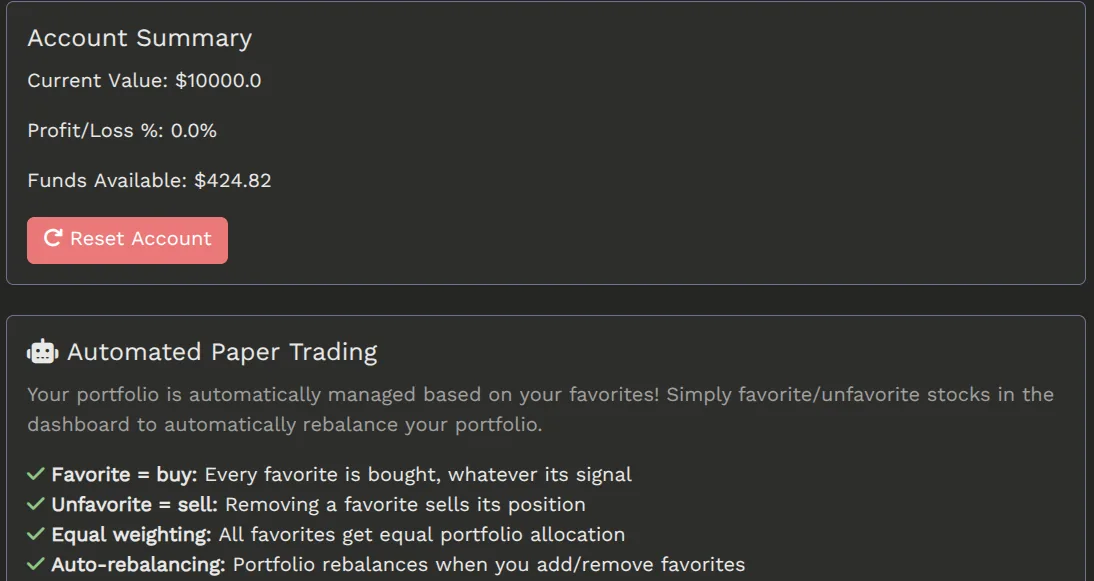
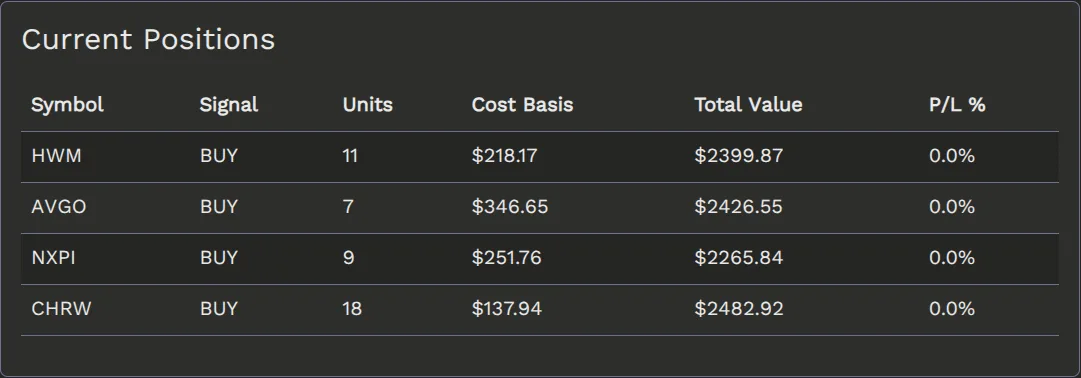
The page lists your current positions with their signal, units, cost basis, value and profit or loss, plus the full trade history. Reset Account starts again from $10,000 and keeps the history.
Pair it with the guide to reading buy and sell signals and the AutoTrader Guide to practice a full plan, from picking stocks to exiting them, before using real money. Laftel Trade isn’t a broker: real trades happen in your own brokerage account.
Not financial advice. This guide is general education, not a recommendation to buy or sell any security. Investing involves risk, including the loss of money you invest, and past results don’t guarantee future results. See our Terms and Conditions.