How to know when to sell a stock
Buying is the easy part. Selling is harder, because it asks you to admit a mistake or give up on a stock that has done well. The best time to decide when you’ll sell is before you buy, while you’re still calm.
Good reasons to sell a stock
- The reason you bought is gone. If you bought for growth and growth stopped, or for a trend and the trend turned, the original case no longer holds.
- Your exit rule was hit. A price level, a percentage drop, or a signal change you chose in advance. The rule only helps if you follow it.
- One position got too big. After a strong run, a single stock can end up as a large share of your portfolio. Trimming it brings your risk back to where you meant it to be.
- You need the money, or you found a use for it you believe in more.
Reasons that are usually weaker
- A scary headline or one bad day, with nothing changed in the company or the trend.
- Waiting to “get back to even” on a loser before selling it.
- Selling a winner too early only because it went up.
Taxes and fees matter too, so check how a sale is taxed where you live.
Ways to set your exit in advance
- A trailing stop. Instead of a fixed price, the stop follows the highest price since you bought, a set percentage below it. If the stock rises from $100 to $130, a 10% trailing stop moves from $90 to $117. Many brokers offer it as an order type.
- A trend or signal change. If you bought because a trend was up, a signal that turns to SELL or HOLD is your cue to review the position.
- Earnings dates. Prices can jump or drop sharply on a report. Decide ahead of time whether you hold a position through one.
- Profit steps. Some investors take part of a gain at set steps, for example every 10%, and let the rest run.
How Laftel Trade helps you decide when to sell
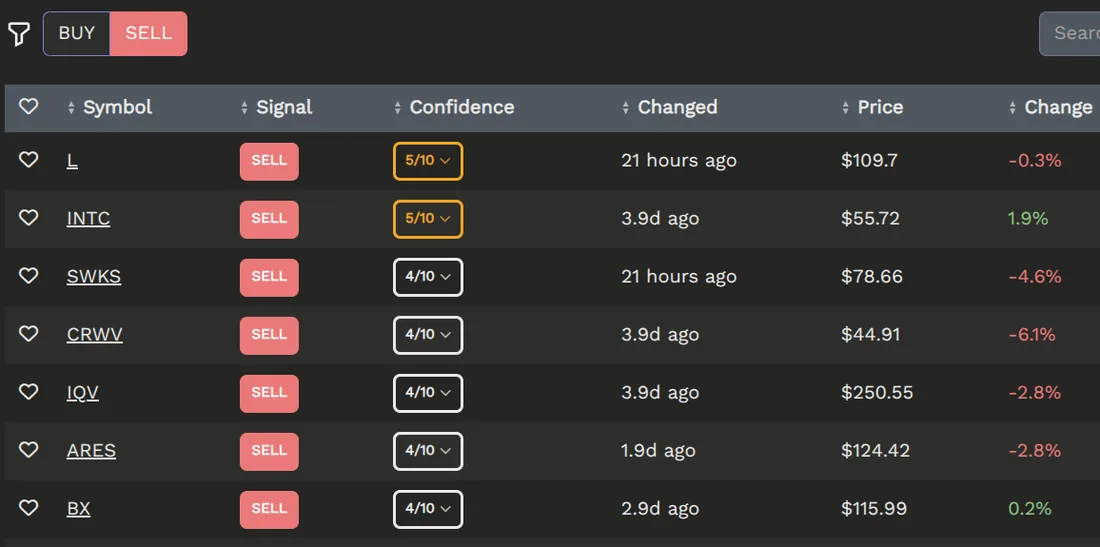
Laftel Trade builds exits into its signals. A BUY turns to HOLD when the price falls 10% or more below its highest close since the BUY, the trailing stop above, and it turns to SELL after two daily closes below its trend lines. Filter the Dashboard by SELL to see every stock whose trend has turned down. A SELL means sell or avoid, not short.
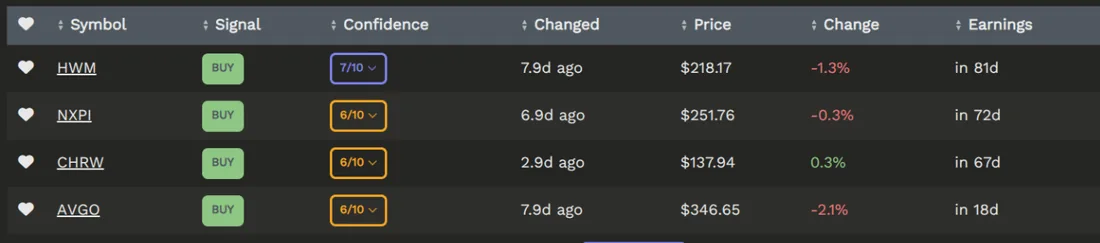
Tap the heart on the stocks you own to make them favorites. The heart at the top of the Dashboard then shows only them, with each one’s signal, confidence and days until its next earnings report.
Premium members get these as alerts by email or push notification, for their favorites:
- the signal changes, for example from BUY to HOLD or SELL;
- during the trading day, the live price suggests the signal will change at the close;
- the gain since you favorited the stock passes another 10%;
- a BUY’s confidence drops to 5 or below;
- a confirmed earnings report is 2 days away.
The alerts tell you something changed; the decision stays yours. To practice an exit plan before using real money, see what paper trading is and how it works.
Not financial advice. This guide is general education, not a recommendation to buy or sell any security. Investing involves risk, including the loss of money you invest, and past results don’t guarantee future results. See our Terms and Conditions.